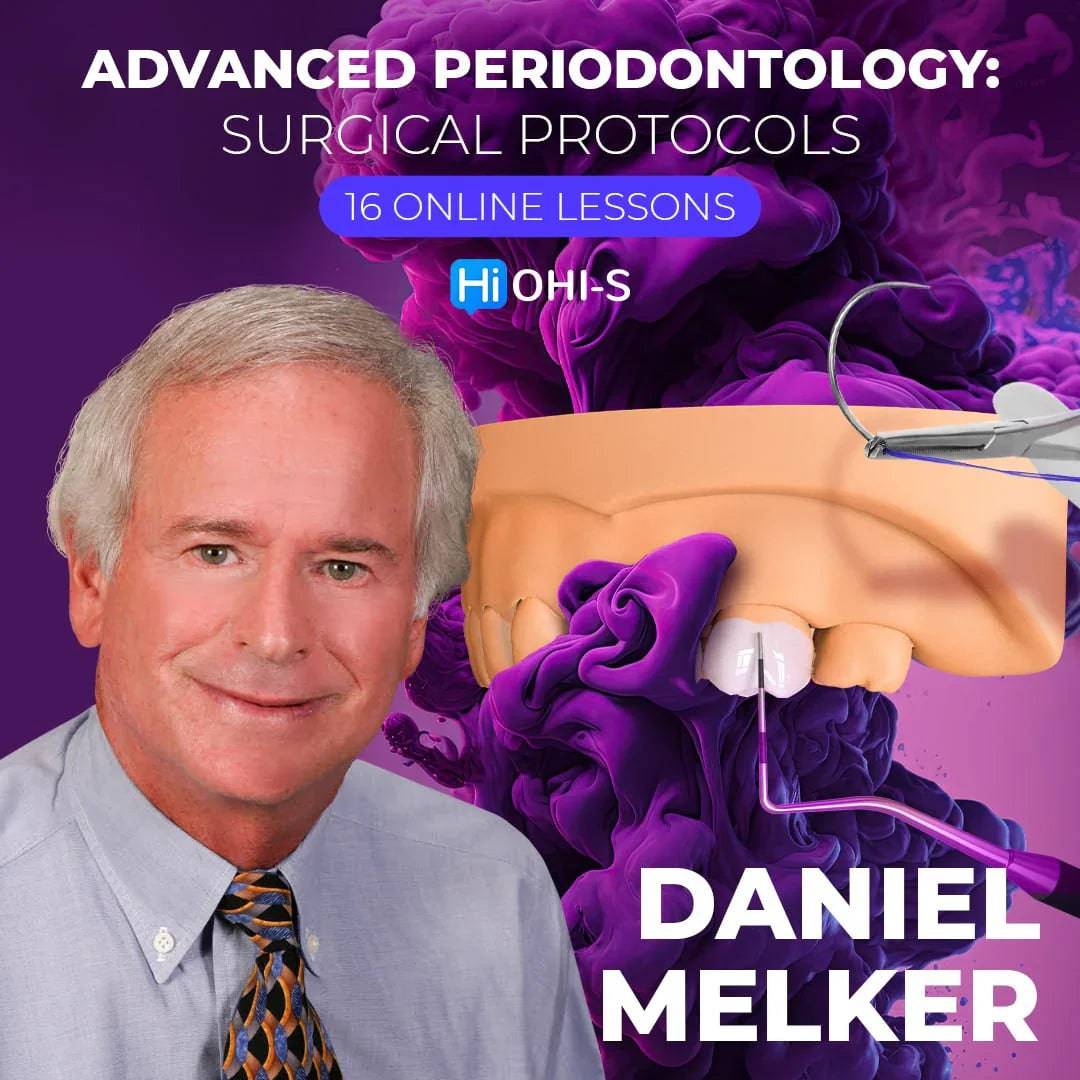
Advanced Periodontology Surgical Protocols
Advanced Periodontology Surgical Protocols
Category: Surgery
Instructor(s): DANIEL MELKER
Course structure: Lessons: 16 lessons | Duration: 11 h 09 min
Course overview
Surgical treatment of periodontal complex cases: from scalpel choosing to suturing!
In Dr. Daniel Melker course, you will learn the protocols of:
– Flap design: full thickness, split thickness, lingual, in the anterior and posterior area
– Removal of exostoses and bone excesses
– Gingivectomy with and without the use of a digital surgical guides
– Treatment of gummy smile
– Frenectomy
– Soft tissue grafting from the palate, maxillary tuberosity and the lingual area
– Altered active and passive eruption
– Treatment of root surface irregularities.
In numerous clinical cases you will work out all the stages of surgical manipulations and evaluate the advantages and long-term results of using various techniques!
Curriculum
Lesson 1. A biological approach to periodontal surgery
- The discussion centers on the significance of understanding biological principles in periodontal surgery. It emphasizes proper flap design and reflection for successful healing and tissue preservation. The speaker critiques certain surgical techniques, advocating for larger flaps to ensure adequate blood supply and access to underlying bone. Various surgical approaches are explored, including full-thickness flaps and parabolic architecture, with an emphasis on precise incisions and thorough diagnosis. Throughout the discussion, the importance of meticulous technique, minimizing trauma, and achieving a natural tissue contour is stressed.
Lesson 2. Flap design, step-by-step protocols
- The speaker provides a detailed explanation of various surgical techniques used in periodontal treatment, emphasizing the importance of precise incisions, proper tissue handling, and understanding anatomical structures. They advocate for a conservative approach that minimizes tissue disruption and potential complications, while also highlighting the role of biological principles in guiding surgical decisions. Several case studies are presented to illustrate both successful outcomes and potential pitfalls associated with different techniques. The speaker stresses the value of experience, knowledge, and meticulous attention to detail in achieving optimal patient results.
Lesson 3. Biologic concepts in periodontal surgery
- The discussion centers on the importance of understanding desired outcomes and biological factors in periodontal surgery. It emphasizes proper surgical techniques, flap design, and minimizing inflammation to ensure long-term stability and prevent complications like relapse. The speaker analyzes several dental cases, highlighting both successful and unsuccessful procedures, and critiques instances where improper technique led to undesirable results. The discussion stresses the need for clinicians to prioritize preserving bone and connective tissue while considering all aspects of a tooth during surgery for optimal cosmetic outcomes.
Lesson 4. Crown lengthening- clinical protocols
- The discussion centers around the significance of meticulous anatomical assessment during dental procedures, particularly crown lengthening. It stresses the need to visualize underlying bone and tissue structures rather than solely relying on measurements, as this allows for identification of crucial features that require specific treatment approaches. The speaker advocates for a thorough examination to ensure biologically sound outcomes and minimize the risk of future complications. Various surgical techniques are presented, emphasizing atraumatic flap placement, preservation of biological structures, and addressing the underlying causes of dental issues rather than just treating symptoms. The long-term benefits of these techniques are highlighted through case examples.
Lesson 5. Periodontal surgery in aesthetic zone
- The discussion centers around various surgical techniques used in dentistry, particularly those focused on anterior teeth preservation and aesthetic outcomes. Emphasis is placed on the importance of meticulous tissue management, flap design, and understanding anatomical structures to achieve natural-looking results and minimize complications. The speaker critiques certain techniques and advocates for specific approaches, illustrating their points with examples from past surgeries. Throughout the discussion, the speaker stresses the need for careful planning, precise execution, and attention to detail during surgical procedures.
Lesson 6. Suturing, materials, tools, basic techniques
- The discussion centers around the importance of proper suturing techniques in dental procedures, emphasizing that success hinges on understanding the desired outcome rather than simply relying on specific techniques. The speaker highlights the significance of secure flap positioning, appropriate material selection, and careful needle handling to minimize patient discomfort and promote optimal healing. Various suturing methods are explored, including interrupted sutures, mattress sutures, and sling sutures, with an emphasis on adapting techniques to individual patient needs and surgical goals. The ultimate aim is to achieve a seamless and natural appearance after treatment by effectively reattaching flaps and securing grafts.
Lesson 7. Suturing techniques and clinical cases
- The discussion centers around various surgical and restorative dental techniques, emphasizing the importance of precision and proper execution for optimal patient outcomes. Specific topics covered include suturing methods for different procedures, periodontal surgery, crown lengthening, grafting techniques, core buildups, and flap surgery. The speaker stresses the significance of understanding tissue anatomy and physiology, meticulous technique application, and material selection to achieve successful healing and long-term results. Throughout the discussion, case studies and examples are used to illustrate key points and demonstrate the benefits of a careful and precise approach.
Lesson 8. Soft tissue grafting from the palate. Part 1
- The discussion centers on the significance of connective tissue grafting in periodontics, highlighting its role as a robust barrier against infection and external factors. The speaker advocates for simple grafting techniques over more complex procedures due to their proven effectiveness and long-term success. They emphasize the importance of proper technique, tissue selection, and understanding the rationale behind each step in the grafting process. The discussion also touches on the potential pitfalls of improper grafting techniques and the need to consider factors like blood supply and tissue type for optimal outcomes.
Lesson 9. Soft tissue grafting from the palate. Part 2
- The presentation focuses on a variety of surgical procedures involving connective tissue grafts. The speaker emphasizes meticulous technique, proper suturing, and understanding anatomy as crucial factors for successful graft integration. They advocate for traditional methods over complex ones and illustrate their points with case studies and demonstrations. The speaker also addresses potential errors in other practitioners' approaches and acknowledges past mistakes in their own practice. Throughout the presentation, the emphasis is on achieving optimal tissue regeneration and long-term success through careful execution of surgical techniques.
Lesson 10. Tuberosity tissue
- The presentation focuses on surgical techniques used in dentistry, particularly those involving tissue grafting. It delves into the advantages of using autogenous tissue grafts and provides a detailed explanation of the process, from harvesting to placement. Emphasis is placed on meticulous flap management, suturing techniques, and long-term graft evaluation for successful outcomes. The presentation also touches upon the importance of collaboration between specialists in achieving comprehensive dental care.
Lesson 11. Allograft tissue
- The presentation focuses on various surgical techniques used in dental procedures, particularly emphasizing the use of palatal tissue grafts. The speaker critiques alternative methods and analyzes case studies to illustrate the importance of meticulous technique and proper tissue management. They stress the value of practical experience and critical evaluation over blindly following trends in the field. The presentation also highlights the speaker's preferred approach to specific procedures, including addressing complications and achieving desired outcomes through careful execution and attention to detail.
Lesson 12. Surgery V part 6
- The discussion centers around the importance of understanding biological factors in dental procedures, particularly focusing on preserving bone structure and minimizing invasive techniques. The speaker advocates for a patient-centered approach that considers individual anatomy and prioritizes long-term health over immediate cosmetic results. They critique certain practices that involve excessive bone removal, highlighting potential complications and emphasizing the need for minimally invasive alternatives. Throughout the discussion, the speaker illustrates their points with case studies and demonstrates preferred techniques for achieving natural-looking and healthy outcomes.
Lesson 13. Prosthetic stage, cores and provisionals
- The presentation focuses on the critical role of proper core buildup in restorative dentistry for achieving long-term success. It emphasizes the need for strong foundations, precise techniques, and a collaborative approach involving dentists and laboratories. The speaker shares clinical examples illustrating the importance of addressing periodontal issues, using appropriate materials, and prioritizing patient comfort throughout the treatment process. They advocate for a conservative approach that considers biological principles and aims to minimize future complications while promoting healthy tooth function. The presentation highlights the need for meticulous attention to detail and a thorough understanding of dental anatomy and procedures to ensure optimal outcomes.
Lesson 14. Root surface irregularities treatment
- The speaker advocates for conservative dental treatment approaches that prioritize saving natural teeth whenever possible. They emphasize the importance of thorough diagnosis and understanding the root cause of dental problems before resorting to extraction. The speaker describes various techniques they use to treat a range of dental issues, including using specialized tools to address developmental grooves, smoothing fractured teeth, and performing biologic shaping for crown lengthening. They also discuss their approach to osseous surgery, emphasizing the importance of mimicking natural bone and tissue growth patterns and advocating for minimally invasive techniques to preserve aesthetics and promote healthy healing.
Lesson 15. Surgery V part 8
- The presentation focuses on advanced dental restoration techniques aimed at achieving long-lasting results. It emphasizes the importance of addressing root causes of inflammation, such as problematic margins and tissue irritation, rather than simply treating symptoms. Various tools, materials, and specific preparation techniques are discussed to minimize complications and promote healthy tissue growth. The speaker highlights the need for meticulous attention to detail throughout the process, from tooth preparation to crown placement, to ensure optimal aesthetics and functionality.
Lesson 16. Surgery V part 9
- The discussion centers on the significance of proper crown placement and the detrimental effects of subgingival margins on long-term dental health. Emphasis is placed on the need for restorative dentists to carefully consider the furcation area during crown planning, as improper placement can lead to complications such as infection and bone loss. The speaker advocates for treating the underlying cause of dental issues rather than merely managing symptoms, using case studies to illustrate their points and techniques. The discussion also touches upon surgical procedures, post-operative care, and the benefits of supragingival margins in restorative dentistry.
Couldn't load pickup availability